
Beyond the Trends: Designing a Kitchen That Works for Your Family (and Lasts for Years)
TL;DR
Timeless kitchen design isn't about following the latest trends. It's about choosing a simple color palette and quality materials that age gracefully, designing a layout that matches how your family actually cooks and eats together, and investing in durable cabinetry and appliances that perform well for 20+ years. The kitchens that look good and work well in 2026 will still look good and work well in 2036.
What Makes a Kitchen Last
Here's something we've noticed after completing hundreds of kitchen remodels in Dallas: the kitchens that make families happiest 10 years later aren't the ones that were trendy when they were built. They're the ones that were built well.
A kitchen that lasts starts with three things: smart layout, quality materials, and honest design choices. None of those things require a designer on staff or a magazine feature. They require knowing how your family uses the space.
Start With How You Actually Cook
Most kitchen design conversations start in the wrong place. People flip through magazines or scroll through Instagram, fall in love with a photo, and then try to make their kitchen match that picture.
But here's the reality: that magazine kitchen was photographed on day one, with a professional stylist, with no one actually cooking in it.
Your kitchen needs to work for Tuesday night when you're making dinner after work. It needs to work when your kids are doing homework at the island. It needs to work when you're entertaining on the weekend. The best kitchens are the ones designed around those moments, not around a photo.
Start by asking yourself honest questions:
Do you cook a lot, or do you cook occasionally? Do you entertain frequently? Do you have kids? Do they hang out in the kitchen while you cook? Do you prefer cooking facing out into the room, or tucked away? How many people do you want to fit at your island or table?
These answers dictate your layout far more than a trend does.
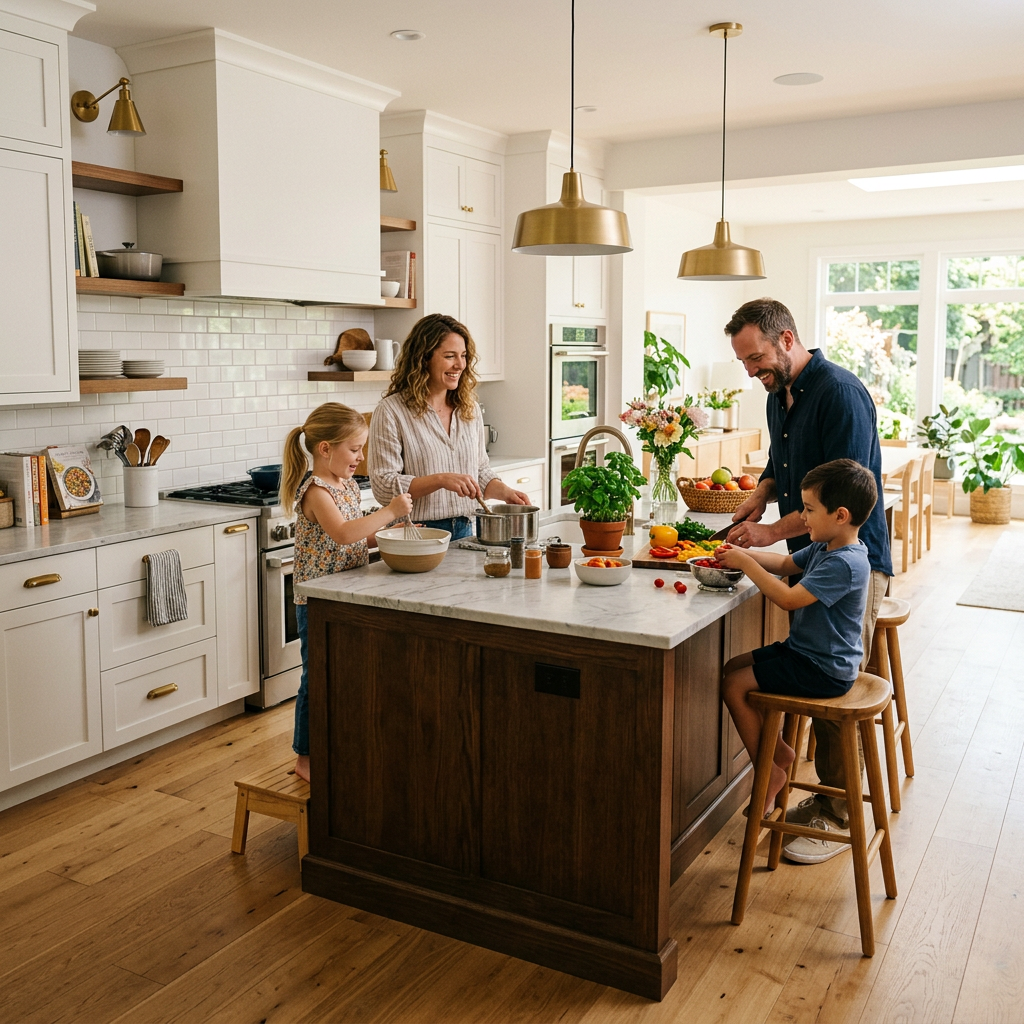
A functional kitchen designed around how families actually use the space - with room for cooking, gathering, and homework.
Choose Colors and Finishes That Don't Expire
The fastest way to make a kitchen look dated is to chase finishes that are popular this year but will feel tired in five years.
White kitchens have been popular for a decade. You know why? Because white kitchens look good. Not just today, but consistently. White cabinetry with natural wood accents works. Neutral colors with one wood tone work. These combinations looked good 15 years ago, and they'll look good 15 years from now.
That's not to say white is your only option. Soft greens, warm grays, and muted blues can work beautifully if they're chosen deliberately, not as a reaction to what you saw on a design blog. The key is choosing colors that you like when you see them in real light, in real rooms, not just on a screen.
The same principle applies to materials. Quartz countertops are popular because they're durable and require minimal maintenance. Granite works. Marble looks beautiful and gets better with age. Avoid trends like ultra-matte everything or hyper-glossy finishes. Choose materials that are practical and that you genuinely like looking at every day.
Build With Materials That Perform
A kitchen that lasts is built with materials that perform well over time.
Your cabinetry is the biggest investment in your kitchen. Choose solid wood or quality plywood, not particle board that swells when humidity changes. Soft-close hinges don't wear out like regular hinges do. Full-extension drawers actually get used and feel better than shallow pulls.
Your appliances need to be able to handle actual use. Stainless steel looks professional and is easy to clean. Your refrigerator, oven, and cooktop should be from brands with good reputations for reliability, not the latest model with 15 smart features that will be outdated in three years.
Backsplash tile should be something you enjoy looking at. Subway tile is popular because it's simple and clean. Large format tile is practical because it requires fewer grout lines. Hand-finished tile develops character. Avoid finishes that show every fingerprint or require constant maintenance.
The materials you choose don't have to be the most expensive available. They have to be honest. They have to do what they're supposed to do, without pretending to be something they're not.
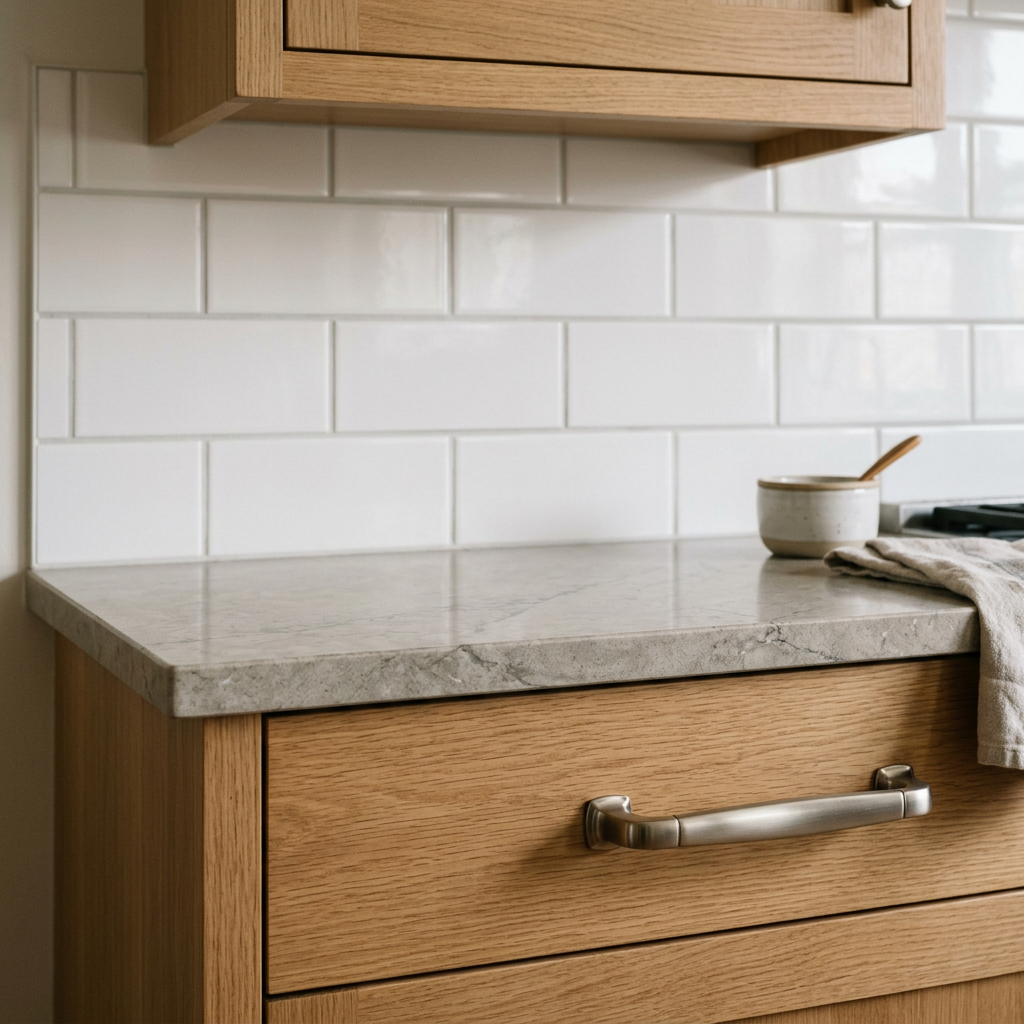
High-quality, durable materials chosen for performance over trends - the foundation of a kitchen that lasts.
The Island Doesn't Have to Be Huge
One trend that needs to die: the oversized kitchen island.
Kitchen islands are useful when they serve a purpose. A place to set down groceries while you're putting them away. Seating for kids to do homework while you cook. A spot to prep food. Extra counter space for the holidays.
An eight-foot island that eats up 40 percent of your kitchen and makes it impossible to move around? That's not functional. That's trying to fit a trend into a space where it doesn't belong.
Design your island around what it actually needs to do. If you have two kids and they work at the kitchen counter, you need seating for two to three. If you don't actually use your island for seating, why have overhang? If your kitchen isn't enormous, a smaller island with proper clearance around it will make the space feel larger and work better.
Lighting Transforms the Space (And Most Kitchens Get It Wrong)
Bad lighting makes a beautiful kitchen look mediocre. Good lighting makes a mediocre kitchen look great.
Most kitchens have fluorescent overhead lighting that's bright but unflattering and harsh. You can't see food properly, and the whole room feels cold.
Layer your lighting. Recessed lighting provides overall illumination without being in your face. Under-cabinet lighting illuminates your countertop and makes food prep easier. Pendant lights over your island provide task lighting and look intentional. Dimmers let you adjust the mood when you're entertaining.
The right lighting isn't trendy. It's transformative. It's the single change that changes how a kitchen feels more than almost anything else.
Cabinetry Height and Depth Matter
Here's something homeowners don't think about until they live with a kitchen: does everything fit the way you actually use it?
Standard cabinet height is 34.5 inches to the countertop. For most people, this works. But if you're taller or shorter, you might prefer 36 inches. If you have back pain, counter height can matter more than you'd expect.
Standard cabinet depth is 24 inches. This is fine if you have a small kitchen and need the space. But 24-inch deep cabinets feel shallow. If your kitchen is large enough, 27-inch or 30-inch deep cabinets provide more useful storage and feel more substantial.
A kitchen designed around your body and how you actually stand at the counter will feel better to live with every day for decades.
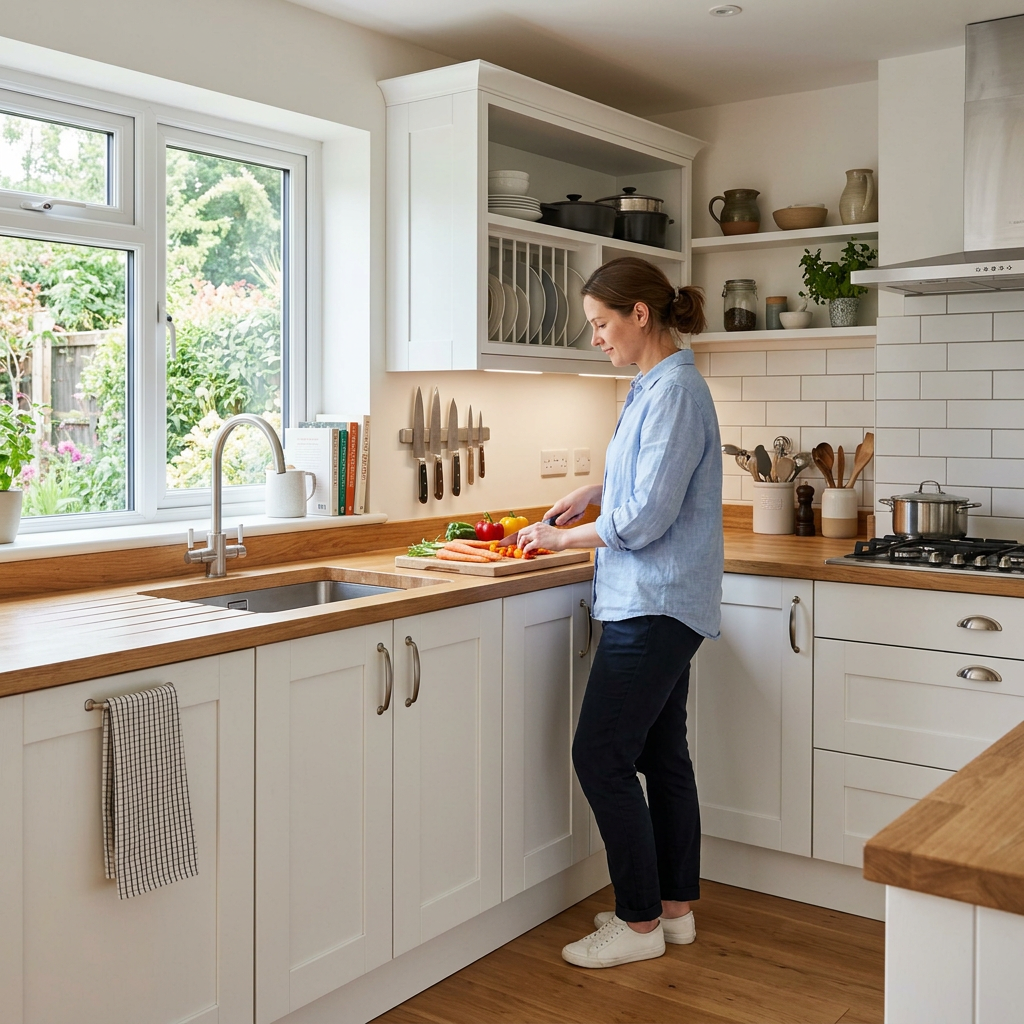
Thoughtfully proportioned cabinetry that works with how your family actually uses the kitchen.
Resale Value Follows Good Design
Here's something that surprises homeowners: the kitchens that feel best to live in also tend to be the kitchens that appeal to future buyers.
A well-designed kitchen with quality materials, smart layout, and honest finishes appeals broadly. Buyers can imagine themselves cooking and gathering there. It looks like a space that works, not a space that looks impressive in photos.
Overly trendy kitchens, unusual color choices, and exotic materials narrow your audience. Future buyers have to imagine stripping it out and starting over. A timeless kitchen? They can just move in and use it.
The financial return on a thoughtful kitchen remodel in Dallas typically ranges from 50 to 80 percent of the project cost, depending on scope. But the daily return on living in a kitchen you genuinely love, that works for your family, and that will look good for decades? That's worth far more.
The Bottom Line
A kitchen that lasts isn't built by chasing trends. It's built by understanding how your family uses the space, choosing quality materials that age gracefully, and making design decisions that you'll be happy with 10 years from now.
When you're planning your kitchen remodel, skip the question "Is this trendy?" and ask instead "Will this work for us? Will this hold up? Do we genuinely like this?"
The answers to those questions create kitchens that look great, work beautifully, and last for decades.
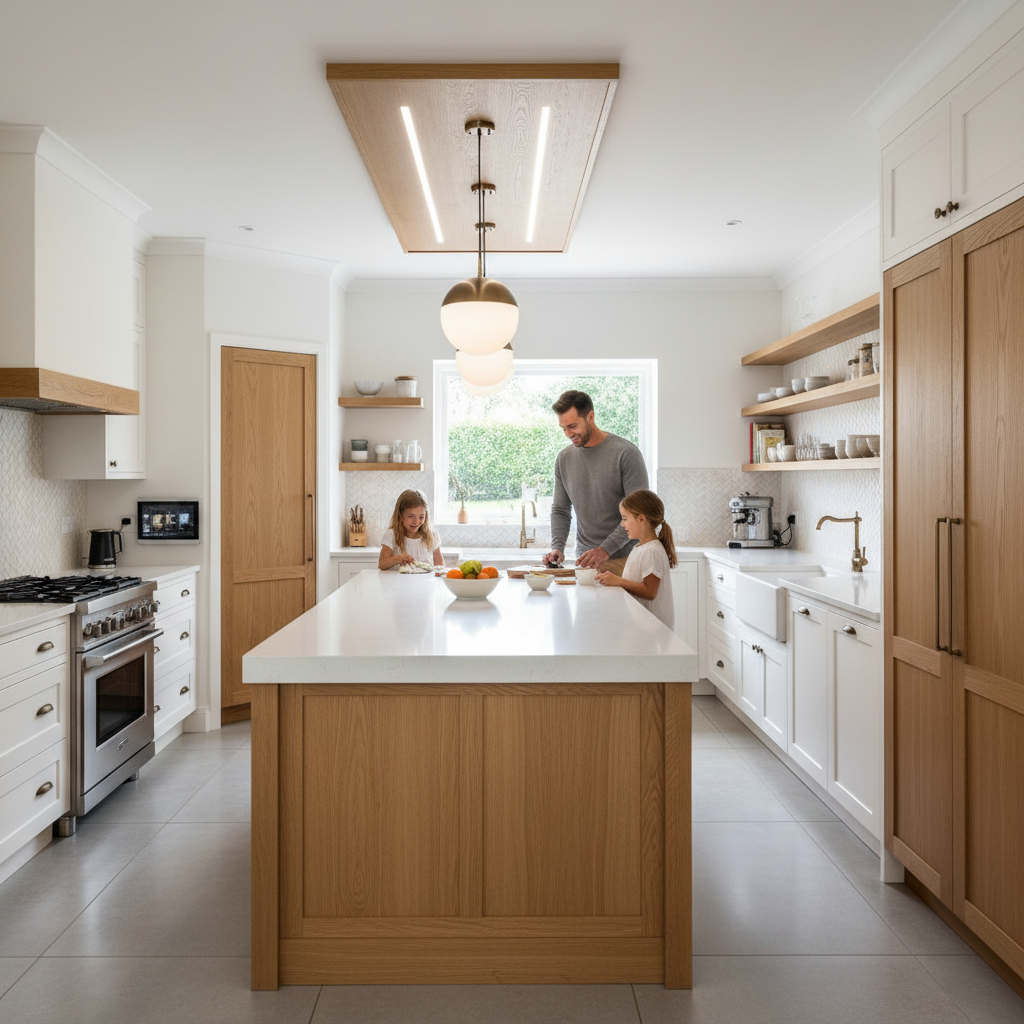
A kitchen designed to last: timeless colors, quality materials, smart layout, and honest design choices that age beautifully.