
How to Plan a Kitchen Remodel: A Step by Step Guide
TL;DR
Set your budget first and stick to it. Decide what actually needs to change versus what you want to upgrade. Work with a contractor early to understand what's involved. Plan for 6 to 8 weeks on average. Get everything in writing before work starts.
Introduction
Most homeowners overthink their kitchen remodel. You walk into your kitchen thinking "I just need new counters," and suddenly you're looking at replacing the entire layout, upgrading appliances, and rethinking your cabinet design. Before you know it, you're over budget and behind schedule.
The truth is planning a kitchen remodel in Dallas is simpler than people make it. You need to know your budget, understand your priorities, and work with someone who can help you avoid the mistakes that cost money and time.
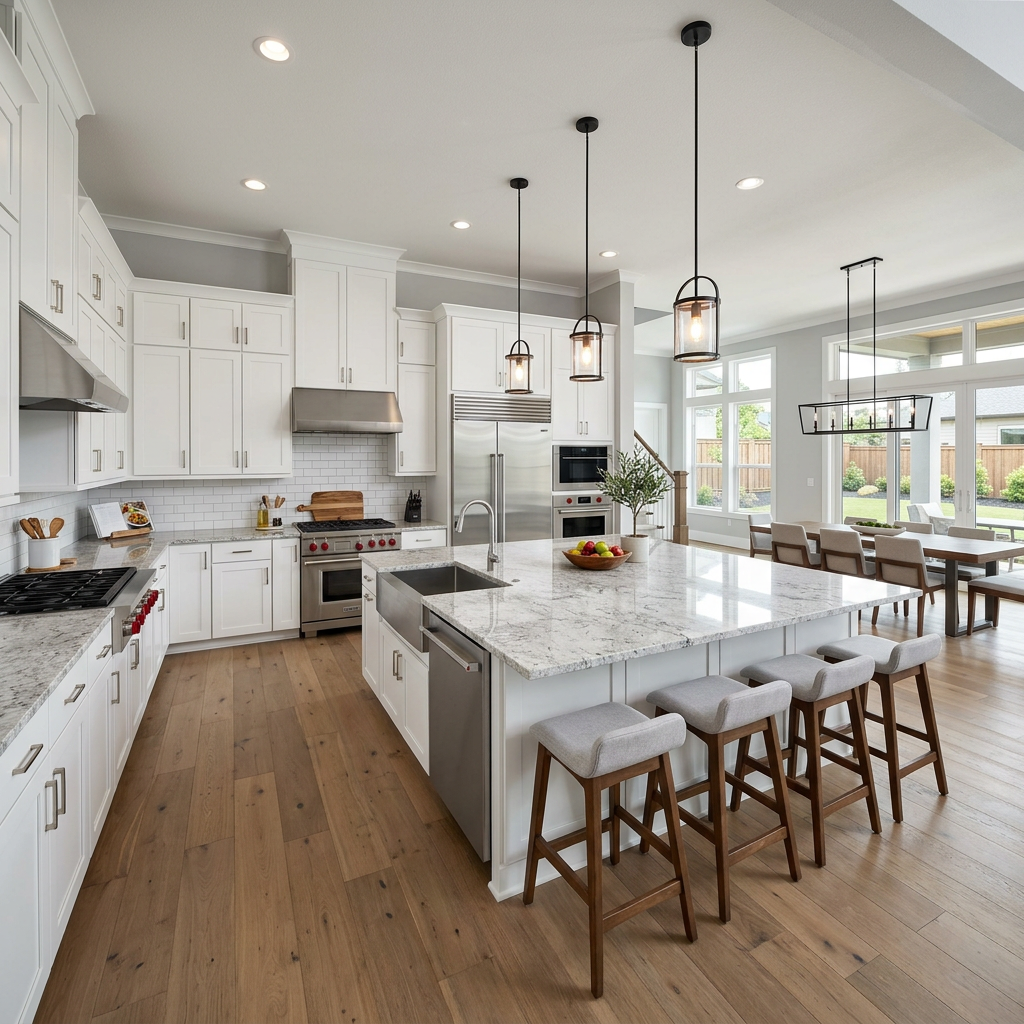
Open-concept kitchens are popular in DFW homes — plan your layout early to avoid expensive changes mid-project.
Set Your Budget and Be Honest About It
Your budget needs to come first, not last. This is the single thing that shapes every decision you'll make.
In the Dallas Fort Worth area, kitchen remodels typically run between $25,000 and $75,000 depending on the scope. A modest update with new cabinets, countertops, and appliances sits around $35,000 to $45,000. A higher end remodel with custom cabinetry, premium appliances, and extensive layout changes can easily reach $60,000 to $100,000 or more.
Here's what matters: decide on your number and tell your contractor. Don't be vague. Say "I have $50,000 to spend" not "I want it to be affordable." When we know your actual limit, we can help you make smart choices about where to invest and where to save.
Most of the budget disputes I see happen because the homeowner didn't have a clear number in mind from the beginning. Everything changes once you do. If you're unsure about costs, request a free kitchen remodeling estimate from a local DFW contractor to get real numbers for your specific project.
Decide What Needs to Change Versus What You Want to Change
Not everything in your kitchen needs updating. But many homeowners treat a remodel like everything has to be new.
Start by listing what's actually broken or outdated. Are your cabinets falling apart? Is your countertop stained and worn? Are your appliances failing? These are things that need to change. They're also usually things that add value to your home.
Then list what you want to change because you don't like it anymore. Maybe your layout feels inefficient. Maybe you hate your backsplash. Maybe you want an island. These are legitimate wants, but they're different from needs. You have flexibility here.
The reason this matters: addressing your needs typically costs less than addressing wants. Priorities help you make decisions when you hit your budget limit, which you probably will.
Plan for Actual Timelines
Kitchen remodels in the Dallas area typically take 6 to 8 weeks from start to finish. That's if everything goes smoothly and permits don't get delayed.
If you're doing structural work, moving plumbing, or upgrading electrical, add 2 to 3 weeks. If you're dealing with homeowner's association approvals or city permit delays, add another week or two.
Here's what surprises people: even in a straightforward kitchen remodel, you'll hit a point around week 4 where things feel messy and chaotic. That's normal. Your kitchen is basically gutted, everything is halfway done, and it doesn't feel like progress is happening. It is. That's just what week 4 looks like.
Plan your remodel for a time when you can handle being without your kitchen. If you've got a young family, summer might work better than the holidays. If you entertain a lot, schedule accordingly.
Understand What Changes Cost Extra
Some upgrades cost a lot more than people expect. It's worth knowing this upfront so you're not shocked later.
Plumbing and Electrical Relocation: Moving appliances or plumbing lines costs more than keeping them where they are. Every foot of moved plumbing adds $150 to $300. Every moved electrical outlet adds $100 to $150. If you want to relocate your sink or move your refrigerator, budget for these costs.
Custom Cabinetry: Custom cabinetry costs significantly more than semi-custom or stock cabinets. You're looking at 40 to 60 percent more for custom work. It's often worth it if you have an unusual space or specific vision, but know the difference going in.
Premium Tile and Backsplash: Quality tile installation in the Dallas area runs $10 to $20 per square foot. That adds up fast on a large backsplash. Planning your backsplash carefully prevents costly mid-project changes.
Appliance Selection: High end appliances cost a lot but they also hold value. Buying the cheapest option often means replacing them sooner. Mid-range appliances offer the best balance of durability and cost for DFW homeowners.
Get Everything in Writing
This is non negotiable. Your contract should spell out what's included, what it costs, when it starts, when it finishes, and what happens if something goes wrong or changes.
Your contract should say specifically what cabinets you're getting, what countertop material and color, what appliances, what backsplash, and what hardware. Not "new cabinets." Specific cabinets. Not "granite countertop." Specific granite, specific color, specific edge detail.
The payment schedule matters too. You shouldn't pay everything upfront. Standard practice in Dallas is a deposit, a mid project payment, and final payment when the work is done. Usually something like 33 percent, 33 percent, 33 percent. Anything else, be cautious.
Common Mistakes to Avoid
Underestimating how long you can live without your kitchen. Plan to eat out or use a temporary setup for longer than you think.
Changing your mind once work starts. Every change order delays the project and costs money. Some changes are worth it, but the ones that aren't become expensive regrets.
Hiring based solely on price. The cheapest bid often becomes expensive once you see the quality of work. We've seen it hundreds of times. Homeowners pay less and get less. Then they pay more to fix it later.
Skipping permits. I know permits feel like red tape. They're actually protection. They ensure the work is done to code and you won't have issues when you sell your house.
Ready to Get Started
The best first step is a conversation with a contractor who can walk you through your space and help you think through priorities. A good contractor will ask you about your budget, your timeline, and what matters most to you. They'll ask questions about how you use your kitchen. They'll help you make decisions instead of just giving you an estimate.
If you're ready to plan your kitchen remodel in the Dallas Fort Worth area, contact us for a free consultation. We'll help you think through it the right way and provide a detailed estimate for your specific project.